The Sacramento-Central Valley Fish Screen Program completed their first fish screen project located on the Mokelumne River in San Joaquin County this fall for the Locke Ranch. The Locke Ranch diversion is located near the historic town of Lockeford in California. The Locke Ranch owns and operates a vertical pump on the west bank of the Mokelumne River for agricultural purposes. The maximum pumping rate is 3,600 gallons-per-minute or 8.02 cubic-feet-per-second and was originally installed in 1924. The pump station draws water directly from … [Read more...]
Sacramento-Central Valley Fish Screen Program Current Projects
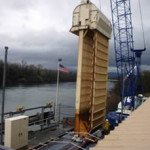
Bella Vista Water District Wintu Fish Screen Project
The Bella Vista Water District fish screen project located south of the Turtle Bay Bridge in Redding on the main stem Sacramento River was completed in March 2012 and the first of five projects installed under the current FWA fish screen program. The project consisted of replacing the existing flat plate screens with new retractable, cylindrical Intake Screens, Inc. fish screens. The old flat plate screens did not meet screening requirements, which triggered the need for a new system. Bella Vista not only supplies agricultural water, but … [Read More...]
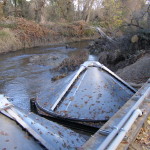
South Sutter Water District Pleasant Grove Canal Completed December 2015
The South Sutter Water District (SSWD) Pleasant Grove Canal fish screen project was completed in December 2015. This 80 cubic feet per second gravity canal is located off of the Auburn Ravine in Placer County. This project was screened with two 14-foot diameter Intake Screens, Inc. (ISI) cone screens and necessary screen components. As a part of the project, a Pacific Gas & Electric (PGE) power line was also installed to power the fish screen system through the Aitken Ranch Mitigation Bank. An article on the … [Read More...]
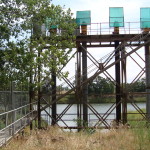
Feather Water District North & South Diversions
The Feather Water District's (FWD) North and South Diversions, located on the Feather River in Sutter County, completed construction of barriers and fish screen systems on both diversion in the fall of 2014. The north diversion is a 78 cubic feet per second (cfs) vertical pumping station at the end of a intake channel off of the main stem Feather River. The south diversion is a vertical pump station located at the end of a dog leg channel of the main stem with a combined total of 40.11 cfs. Both diversions … [Read More...]